Georgia · Food guide
Georgian food: what you should actually try
The landscape keeps changing — the food stays. A personal guide to the dishes that stick with you.
Georgia looks small on a map and feels huge once you’re there. Between Kutaisi and Batumi, Tbilisi and Kazbegi, Mestia and the old sanatoriums of Tskaltubo, the landscape flips so often you could swear you’ve crossed a border. What stays the same is the food. Whether you’re hiking in summer, skiing in winter, or wandering a city in spring: Georgian food is the constant — generous, herb-forward, and usually meant to be shared.
I’ve been several times, in every season. This isn’t a top-ten list or a restaurant directory. It’s the dishes that stuck with me — and the tips I wish I’d had on the first trip.
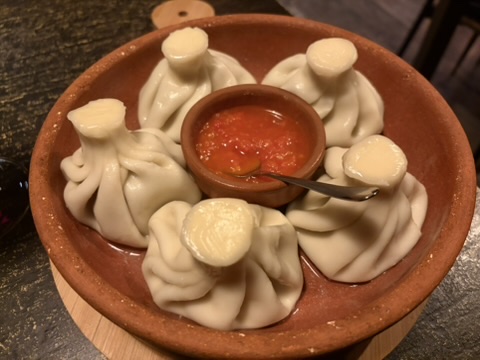
Khinkali
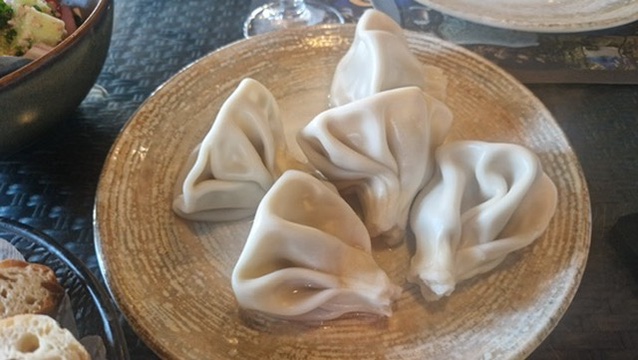
Georgian dumplings with the knotted top. Meat khinkali come with hot broth inside — bite carefully, sip, then eat. Many people leave the dough “handle.” In Tbilisi and Kutaisi you order them by the pile; five is a solid start, ten isn’t greed. Black pepper on top. Hands are fine.
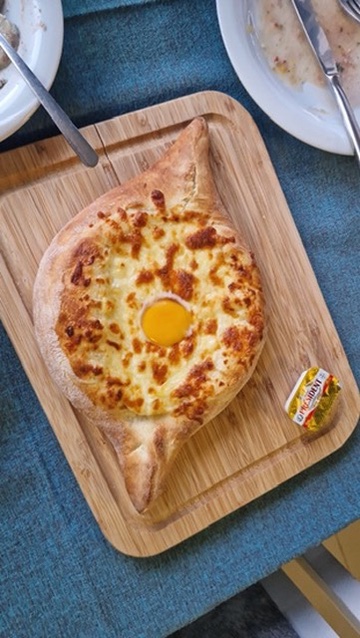
Khachapuri
Cheese bread in many forms. The boat-shaped Adjaran style with an egg on top is the famous one; round Imeretian and other regional versions show up just as often. If you like cheese and warm bread, you’ll be happy — and you’ll meet khachapuri everywhere, from ski resorts to city tables.
Badrijani nigvzit
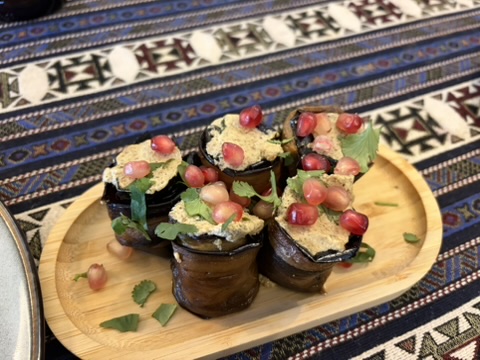
Fried eggplant rolls filled with walnut paste, often finished with pomegranate seeds. Creamy, nutty, a little sweet-tart. For me, one of the best vegetarian dishes in the Caucasus — and a smart first plate if you’re still learning what “Georgian” tastes like.
Salad, bread & ketsi dishes
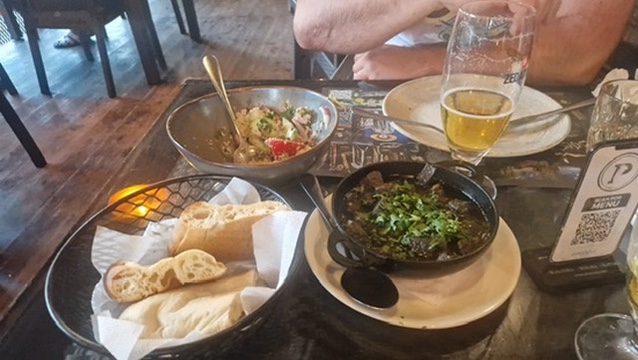
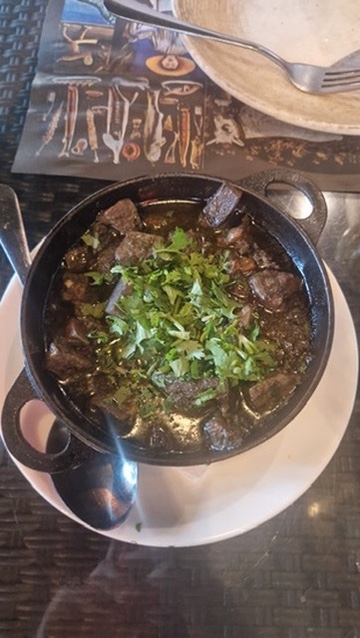
Tomato–cucumber salad with lots of coriander sounds basic. It isn’t. In Georgia this salad balances the richer plates. A ketsi is the small cast-iron or clay pan that arrives hot: hearty meat dishes, often crowned with fresh coriander. Shotis puri from a clay oven belongs on the table — crisp outside, soft inside, perfect for sauces.
Mtsvadi — from the mangal to the ski slope
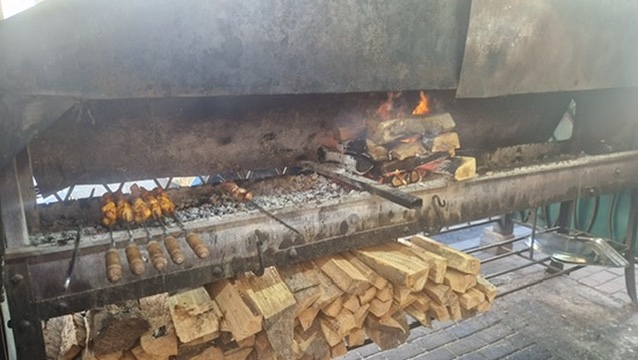
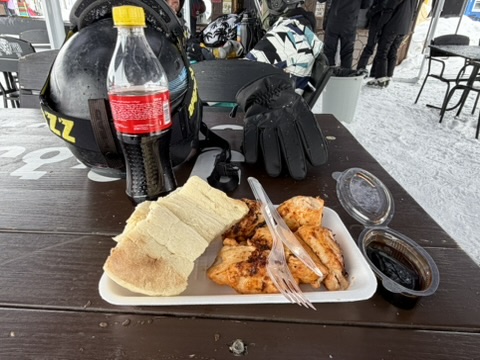
Grilled meat from the mangal belongs in the picture as much as the long dinners. Whether in a restaurant courtyard or with a ski helmet beside the tray: simple, hot, filling — and often better than you expect.
Modern twists & street moments
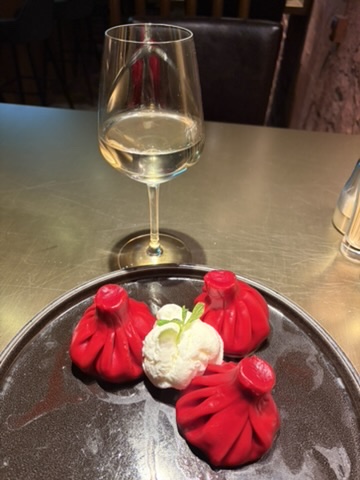
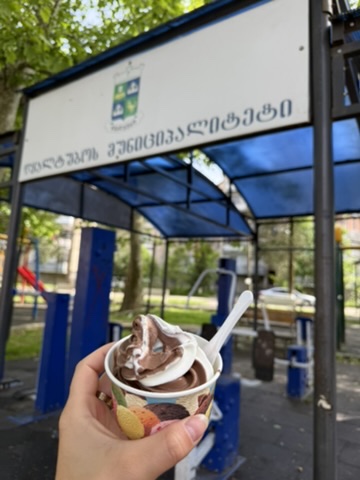
Georgia isn’t only tradition. In the cities, kitchens play with form and flavour — deep-red dessert khinkali with ice cream and white wine, for example. And somewhere in between, in Lanchkhuti: soft-serve in a cup. Those small moments belong here too — between a marshrutka, a hike, and the next long dinner.
Table tips
- Supra culture: Many dishes land in the middle. Share, taste, reorder.
- Vegetarian-friendly: Badrijani, pkhali, salads, khachapuri, lobio.
- Coriander: Fresh kinza is everywhere. If you don’t like it, say so early.
- Share instead of one main each: Three to four dishes for two beats solo mains.
Tip: In Tbilisi, a base within walking distance of restaurant-heavy neighbourhoods makes spontaneous dinners easy.
Budget (rough, as of 2026)
| Situation | Rough guide per person |
|---|---|
| Simple lunch (khinkali / salad / bread) | about €8–15 |
| Shared dinner (3–5 dishes + a drink) | about €15–30 |
| Wine / local beer | often cheaper than in Western Europe |
| Street snack / soft-serve | pocket-change range |
Prices shift — check before you travel. Smaller towns are often a bit cheaper than central Tbilisi hotspots.
FAQ
- Do I need to eat meat to “get” Georgian food?
- No. Walnuts, vegetables, cheese, and bread carry a big share of the flavour world.
- How do you eat khinkali?
- Hold the top knot, bite carefully, drink the broth, eat the rest. Hands are normal.
- Is Georgian food spicy-hot?
- Usually more herby than chilli-hot. Add ajika if you want heat.
- Same dishes in Batumi, Kutaisi, and Tbilisi?
- The basics yes — regional twists and quality vary; that’s part of the fun.